Understanding Asset Valuation: Salvage Value, Book Value, and Scrap Value

Understanding Asset Valuation: Salvage Value, Book Value, and Scrap Value

Understanding Asset Valuation: 

Salvage Value, Book Value, and Scrap Value

Introduction:

  • In the realm of asset valuation, various terms play a crucial role in determining the financial standing of an organization. Three key concepts that often come into focus are Salvage Value, Book Value, and Scrap Value. Each of these terms contributes uniquely to understanding the worth of an asset, and their distinctions are vital for accurate financial reporting and decision-making.

1.Salvage Value:

  • Salvage value, also known as residual value, is the estimated residual worth of an asset at the end of its useful life. It represents the amount a company expects to receive when it disposes of the asset or removes it from service. Determining salvage value is crucial for calculating depreciation, as it influences the total depreciation expense over the asset's useful life.
  • The salvage value is an estimate, and factors such as market conditions, technological advancements, and the physical condition of the asset contribute to this valuation. The more accurately a company can estimate the salvage value, the more precise its depreciation calculations will be.

2.Book Value:

  • Book value, also referred to as carrying value or net book value, is the value of an asset as recorded on a company's balance sheet. It is calculated by subtracting the accumulated depreciation from the original cost of the asset. The book value represents the asset's net worth based on accounting records.
  • Book value is a useful metric for assessing an asset's economic value to the company at a specific point in time. However, it may not reflect the market value of the asset or its true worth in a dynamic business environment.

3.Scrap Value:

  • Scrap value, also known as salvage value in some contexts, is the amount a company expects to receive from selling or scrapping an asset at the end of its useful life. Unlike salvage value, which is more comprehensive and considers potential alternative uses, scrap value is specifically associated with the proceeds from selling the asset as scrap material.
  • Scrap value is relevant for assets with minimal or no remaining useful life, where the primary option is to sell the asset as scrap. Companies need to consider factors such as current market prices for scrap materials when estimating the scrap value of an asset.

Understanding the Differences:

Focus on Time:

   - Salvage value focuses on the end of an asset's useful life.
   - Book value represents the current worth of an asset on the balance sheet.
   - Scrap value is relevant when an asset is considered for disposal.

Calculation Method:

   - Salvage value involves estimates based on market conditions and the asset's condition.
   - Book value is a calculated figure derived from the original cost and accumulated depreciation.
   - Scrap value considers the potential proceeds from selling the asset as scrap material.


Conclusion:

  • In conclusion, salvage value, book value, and scrap value are integral components of asset valuation with distinct purposes. Salvage value aids in depreciation calculations, book value reflects the asset's current worth on the balance sheet, and scrap value is crucial for assets nearing the end of their useful life. A comprehensive understanding of these concepts empowers businesses to make informed financial decisions and effectively manage their asset portfolios.
 Comparing depreciation and obsolescence based on various factors

Comparing depreciation and obsolescence based on various factors

 Comparing 

depreciation and obsolescence based on various factors:


Factor Depreciation Obsolescence
Loss of Value Gradual loss due to wear and tear, age, and use. Can be sudden or gradual, resulting from external factors like technological advancements or changes in market demand.
Condition Related to the physical condition of the asset. Related to external factors impacting the asset's relevance or utility.
Nature of Impact Internal factors like wear and tear. External factors like technological changes or shifts in market demand.
Age Accumulates over the asset's useful life. May occur at any stage of an asset's life, especially when it becomes outdated or irrelevant.
Method to Find-out Calculated using methods like straight-line, declining balance, or units of production. Requires ongoing analysis of market trends, technological advancements, and other external factors affecting the asset.


Depreciation vs. Obsolescence: Understanding the Differences and Comparisons

Depreciation vs. Obsolescence: Understanding the Differences and Comparisons

Depreciation vs. Obsolescence: Understanding the Differences and Comparisons


Introduction:

  • Depreciation and obsolescence are terms frequently used in accounting and finance, often interchangeably. However, they represent distinct concepts with different implications for asset valuation and financial decision-making. In this article, we will delve into the definitions of depreciation and obsolescence, highlighting their differences and drawing comparisons between the two.

Depreciation:

  • Depreciation is an accounting method used to allocate the cost of a tangible asset over its useful life. It reflects the decrease in the value of an asset due to factors such as wear and tear, age, and regular use. Depreciation helps businesses match the cost of an asset with the revenue it generates over time, providing a more accurate representation of the true economic cost of using that asset.
  • There are various methods for calculating depreciation, including straight-line depreciation, declining balance depreciation, and units of production depreciation. The choice of method depends on factors such as the nature of the asset and its expected pattern of use.

Obsolescence:

  • Obsolescence, on the other hand, refers to the diminished value of an asset resulting from it becoming outdated or no longer in demand. Unlike depreciation, which is primarily related to wear and tear or physical deterioration, obsolescence is tied to factors such as technological advancements, changes in market preferences, or shifts in regulatory requirements.
  • Types of obsolescence include technological obsolescence (rendering an asset obsolete due to technological advancements), functional obsolescence (a decline in an asset's value due to changes in consumer preferences or market needs), and economic obsolescence (external factors like changes in laws or economic conditions affecting the asset's value).

Differences between Depreciation and Obsolescence:

Nature of Impact:

  • Depreciation: Primarily results from wear and tear, physical deterioration, or regular usage.
  • Obsolescence: Arises from factors external to the asset, such as technological advancements or changes in market demand.

Timing of Impact:

  • Depreciation: Occurs gradually over the asset's useful life.
  • Obsolescence: Can occur suddenly or gradually, often influenced by external events or industry trends.

Calculation Methods:

  • Depreciation: Calculated using methods like straight-line, declining balance, or units of production.
  • Obsolescence: Involves assessing external factors affecting the asset's value, such as market trends and technological developments.

Comparisons:


Common Ground:

  • Both depreciation and obsolescence contribute to the decline in the value of an asset over time.

Mitigation Strategies:

  • Strategies to mitigate depreciation involve regular maintenance and repairs.
  • Mitigating obsolescence often requires proactive monitoring of industry trends, technological advancements, and market demand, with strategic planning for asset upgrades or replacements.

Timing of Recognition:

  • Depreciation is recognized gradually over the asset's useful life.
  • Obsolescence may be recognized suddenly when an asset becomes obsolete or gradually as its value diminishes over time.

Conclusion:

  • In summary, while depreciation and obsolescence both contribute to the reduction in the value of assets, they stem from different sources and have distinct implications for financial management. Understanding these differences is crucial for businesses to develop effective strategies for asset management, replacement planning, and overall financial sustainability. Depreciation addresses the wear and tear of assets over time, while obsolescence considers external factors that can impact an asset's value, necessitating a forward-looking approach to asset management.
Understanding Depreciation of Assets: Exploring Functional, Physical, and Contingent Depreciation

Understanding Depreciation of Assets: Exploring Functional, Physical, and Contingent Depreciation

Understanding Depreciation of Assets: Exploring Functional, Physical, and Contingent Depreciation


Introduction:


Depreciation is a crucial accounting concept that reflects the decrease in the value of an asset over time. This reduction in value is attributed to various factors such as wear and tear, obsolescence, or the passage of time. Businesses use depreciation to allocate the cost of an asset over its useful life, helping them accurately represent the true economic cost of using that asset. In this article, we will delve into the different types of depreciation, with a focus on functional, physical, and contingent depreciation.

Types of Depreciation:

1.Functional Depreciation:


Functional depreciation occurs when an asset's efficiency or functionality decreases over time. This type of depreciation is often associated with technological advancements or changes in market demand that render the asset less effective in fulfilling its intended purpose. For example, a computer system may experience functional depreciation as newer models with enhanced features become available, making the older system less efficient.

Businesses must regularly assess their assets for functional depreciation to make informed decisions about upgrades or replacements. Accurate evaluation of functional depreciation ensures that resources are allocated optimally, maintaining operational efficiency.

2.Physical Depreciation:


Physical depreciation is the most common and easily recognizable form of depreciation. It refers to the wear and tear that an asset experiences due to regular use and exposure to the elements. Physical depreciation affects tangible assets such as machinery, vehicles, and buildings. As these assets age, their physical condition deteriorates, leading to a decline in their market value.

Regular maintenance and repairs can mitigate physical depreciation to some extent, but it is inevitable over an asset's lifespan. Accounting for physical depreciation allows businesses to plan for the eventual replacement or major refurbishment of assets, ensuring continued productivity.

3.Contingent Depreciation:


Contingent depreciation is less straightforward and is associated with external factors that may impact an asset's value. This type of depreciation is contingent on events such as changes in market conditions, regulatory developments, or economic downturns. For instance, a company operating in an industry affected by rapid technological changes may experience contingent depreciation if its assets quickly become outdated.

Anticipating contingent depreciation requires a comprehensive understanding of the external factors influencing an industry or market. Businesses need to remain agile and adaptable to navigate contingent depreciation effectively, making strategic decisions to minimize its impact on asset values.


Conclusion:


Depreciation is a vital aspect of financial accounting that reflects the economic reality of asset usage over time. Functional, physical, and contingent depreciation represent different facets of the overall depreciation process, each requiring careful consideration by businesses. By understanding and accounting for these various forms of depreciation, organizations can make informed decisions about asset management, replacement strategies, and resource allocation, ensuring long-term financial sustainability.
AE Environmental Engineer class 1 Vacancy - Himachal Pradesh Public Service Commission

AE Environmental Engineer class 1 Vacancy - Himachal Pradesh Public Service Commission

Job and Opportunities

Dear Students
Himachal Pradesh Public Service Commission
invites the application forms to the post of Assistant Environmental Engineer, Class-I (on contract basis) in H.P. State Pollution Control Board under the Department of Environment, Science & Technology, H.P.

TOTAL POST: 10
POST NAME:
Assistant Environmental Engineer

EDUCATIONAL QUALIFICATION
1. 1st Class Bachelor's Degree in either
Chemical, Environmental, Civil, Industrial
or Mechanical Engineering.

AGE LIMIT
Category Lower – Upper Age Limit
1. UR 18-45

Age Relaxations as per Norms
SELECTION PROCESS
1. Computer Based Exam

PAY MATRIX
Pay Band Level -18
(Rs. 56100 -177500)

HOW TO APPLY
Start date: 03-11-2023
Last date: 30 -11-2023

Application Fees:
For General Candidates: Rs. 400/-
For SC/ ST/ OBC (BPL)/ EWS (BPL) of HP
Candidates: Rs. 100/-
For Female/ PWD/ Ex- Servicemen of HP: NIL

Advertisement Link:
http://www.hppsc.hp.gov.in/hppsc/WriteReadData/LINKS/ASSITANT%20ENVIRONMENTAL%20ENGINEER6024eeaf-8378-42c9-afef-4946f6287d8a.pdf

Transformation of stress and strain - Stength of material

Transformation of stress and strain - Stength of material

 Transformation of stress and strain 

Civil Engineering Questions

Radius of Mohr Circle

Radius of Mohr circle
Radius of Mohr Circle

Principal Stress and maximum shear stress:-  

  • It is the maximum or minimum normal stress which may be developed on a loaded body. The plane of principal stress does not carry any shear stress.
  • Mohr’s Circle for plane stress o It is the locus of points representing the magnitude of normal and shear stress at various plane in a given stress element.
Principal stress and Max Shear stress


Principal stress
Principal Stress

Normal Stress

Normal stress
Normal Stress

Mohr circle for uniaxial loading condition

Minimum Principal Stress

Minimum principal stress


Diameter of Mohr Circle

Diameter of Mohr circle


Normal stress and Resultant stress on plane of Maximum shear stress

Normal strss and Resultant stress on plane of maximum shear stress


Bending Stress in Beam Questions - Strength of Material - civil engineering

Bending Stress in Beam Questions - Strength of Material - civil engineering

 Bending stress in Beam - Strength of Material

CIVIL ENGINEERING QUESTIONS

Previous year civil engineering questions related to strength of material (SOM) subject topic Bending stress in Beam asked in UPSC ESE examination. 


Section Modulus of Important section

section modulus of rectangular,solid circular, hollow circular and triangular section


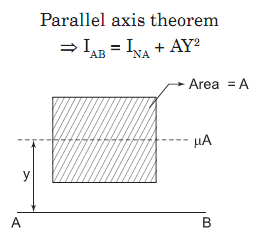
Parallel Axis theorem


Perpendicular Axis theorem

Perpendicular Axis theorem

Flexural Formula

Flexural formula for Bending stress in beam


Question-Answer civil engineering study


Shear stress in beam Questions - Strength of Material civil engineering

Shear stress in beam Questions - Strength of Material civil engineering

 Shear stress in Beam - Strength of Material

CIVIL ENGINEERING QUESTIONS

Question-Answer civil engineering study

Previous year civil engineering questions related to strength of material (SOM) subject topic shear stress in Beam asked in UPSC ESE examination. 


Shear Force per unit length = `H/x` = `(VAy)/I`
Shear stress at the level y from N.A. = q = `(VAy)/Ib`

Shear stress in Rectangular beam
Shear stress in rectangular beam

Shear stress in I section

shear stress in I section

Shear stress in circular section

shear stress in circular section

Shear stress in triangular section

Shear stress in triangular section


Shear stress in Quadrilateral section about diagonal

Shear stress in Quadrilateral section about diagonal